
Male Pattern Baldness: Causes, Stages & Treatment Options
Male pattern baldness (MPB), or androgenetic alopecia, is the most common type of hair loss in men. It affects more than 95% of men by the age of 80 and typically starts before middle age.
If you find that your hairline is receding, you have a bald spot on your crown, or your hair is thinning on one side, you may be experiencing male pattern baldness.
What is male pattern baldness?
Male pattern baldness is a type of hair loss that exclusively affects men and people assigned male at birth. It’s characterised by hair loss that starts at the temples and progresses across the crown and mid-scalp. Unlike female pattern hair loss, which tends to spread evenly across the scalp, male pattern baldness affects only the follicles at the front and top of the scalp, leaving the hair around the sides and back of the head intact.
What causes male pattern baldness?
Male pattern baldness develops as a result of several contributing factors, including hormones, genetics, and age.
A key hormone involved is dihydrotestosterone (DHT), a male sex hormone that attaches to androgen receptors in the hair follicles. This binding causes the follicles to gradually shrink, and as they become smaller, they eventually stop producing hair.
Although all men produce DHT, not everyone experiences male pattern baldness. Genetic factors influence both how much DHT the body produces and how sensitive the hair follicles are to it. In some cases, higher levels of oestrogen may help counteract hair loss by reducing DHT production.
While DHT levels tend to decline with age, hair loss often becomes more noticeable. This is because male pattern baldness is a progressive condition that worsens over time if left untreated. However, early intervention can help slow, halt, and in some cases even reverse hair loss. Learn more about when male pattern baldness typically begins.
Environmental and lifestyle factors can also contribute to hair loss, particularly those that negatively affect overall health. These include:
- Stress- and anxiety-related hair loss
- Vitamin deficiencies linked to hair thinning
- Smoking, which can double the risk of hair loss
Hair loss has also been associated with chronic health conditions such as diabetes and high blood pressure. Learn more about the link between diabetes and hair loss.
If hair loss occurs alongside another medical condition or after starting a new medication, it’s important to seek medical advice. Hair loss can have multiple causes, so a doctor should assess and confirm the type of hair loss you are experiencing.
How is male pattern baldness diagnosed?
Your doctor will ask you a series of questions to rule out any causes of temporary hair loss, such as eating disorders, autoimmune conditions, recent chemotherapy treatment, or mental health issues. They will also examine your hair and scalp for the typical signs of male pattern baldness. This usually consists of thinning hair around the temples and/or crown. Eventually, the hair may become so thin you can see your scalp.
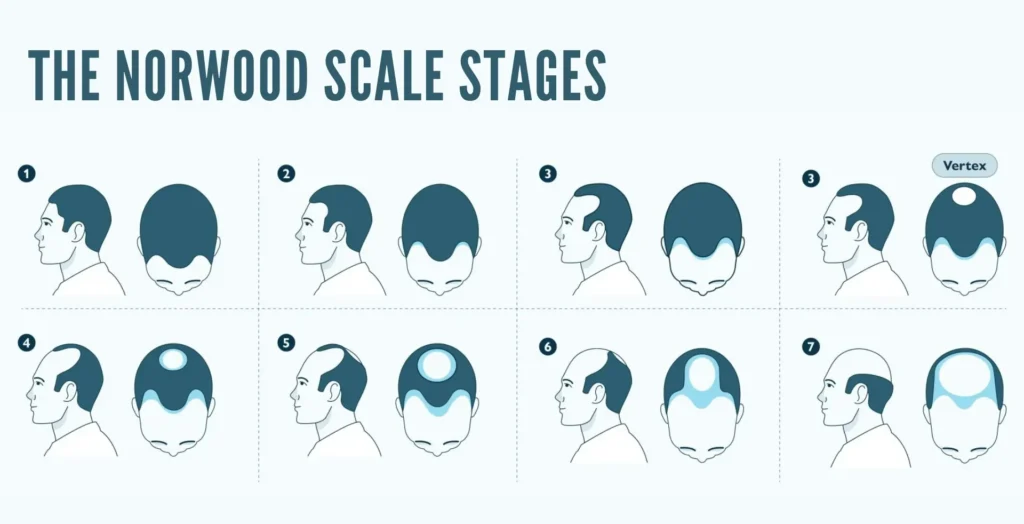
Hair transplant surgeons use a chart called the Norwood scale (sometimes known as the Hamilton-Norwood scale) to diagnose male pattern baldness. This chart indicates the various degrees of hair loss that usually occur in mild, moderate, and severe male pattern baldness.
Is male pattern baldness inherited?
Research indicates that while DHT acts as the trigger for male pattern baldness, genetics also play a significant role. Around 80% of individuals affected by male pattern baldness have a family history of androgenetic alopecia.
The condition has been strongly associated with the androgen receptor (AR) gene, which regulates how testosterone and other androgens affect the body. Individuals with a more active AR gene are at a higher risk of developing androgenetic alopecia.
Is there a way to prevent male pattern baldness?
Because male pattern baldness is largely influenced by genetics and hormones, it can’t be completely prevented if you’re predisposed to it. However, there are steps you can take to maintain the health of your existing hair and help minimise further hair loss. These include:
- Using DHT blockers such as finasteride and dutasteride
- Following a balanced, nutrient-rich diet
- Managing and reducing stress levels
- Limiting heat-based styling practices
- Quitting smoking
- Avoiding tight hairstyles, including dreadlocks and man buns
These measures can support hair health and may help slow the progression of hair loss.
Stages of male pattern baldness
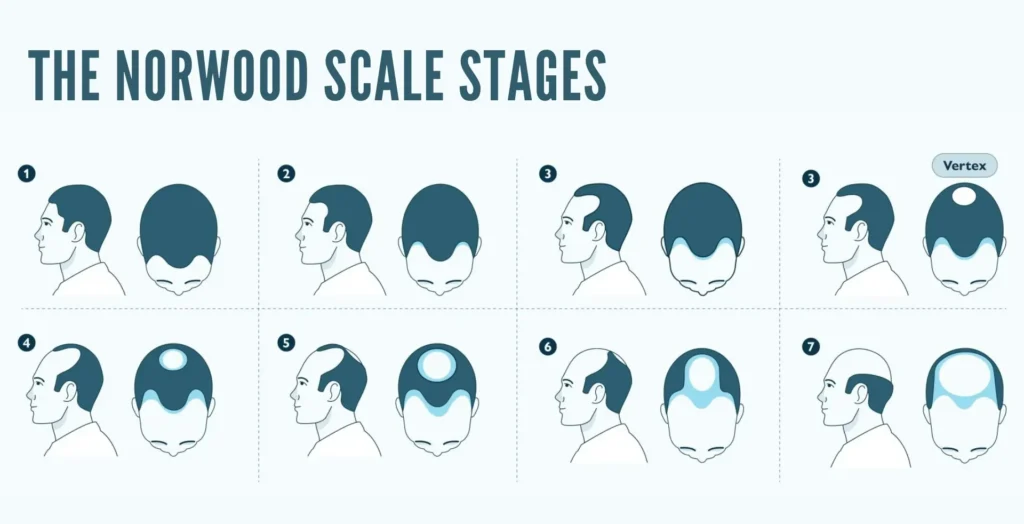
Norwood stage 1: Very little hair thinning around the temples; no crown hair loss
Norwood stage 2: Slight thinning around the temples; no crown hair loss
Norwood stage 3: Visible hairline recession (may be M, U or V shape); no crown hair loss
Norwood stage 3A: Slight hairline recession, with some visible hair loss on the crown
Norwood stage 4: Crown and temple hair loss spreads, though there’s still good hair density across the mid-scalp
Norwood stage 5: Extensive crown and temple hair loss
Norwood stage 6: Widespread hair loss, with crown and temple hair loss meeting. Some hair remains at the edges of the crown
Norwood stage 7: All hair is gone from the temples, crown, and mid-scalp
Most men don’t notice any hair loss until they’re at stages 2-3. If you have a genetic predisposition to male baldness, you may be more aware and notice it at stage 1.
In rare cases, hair loss may progress beyond Norwood stage 7. Retrograde alopecia is a type of aggressive pattern baldness that affects hair at the nape and around the ears and can impact the safe donor area for a hair transplant.
What are ways to treat male pattern baldness?
There are several treatment options available for male pattern baldness. While some people choose not to seek treatment, both medical and surgical solutions can help slow hair loss and improve thinning around the hairline and crown.
Clinical studies show that approved treatments can slow or stop hair loss, and in some cases promote regrowth, depending on how early treatment begins.
Minoxidil
Minoxidil (commonly known as Rogaine) is a topical treatment applied to the scalp to stimulate hair growth. It can slow hair loss and may encourage some regrowth, but results vary. Hair loss typically returns if treatment is stopped.
Finasteride
Finasteride (Propecia) is an oral medication that reduces DHT levels, a key cause of male pattern baldness. It is generally more effective than minoxidil at slowing hair loss and works best when taken daily. Hair loss may resume if treatment is discontinued, and some users experience temporary shedding when starting the medication.
Dutasteride
Dutasteride is a stronger oral medication that blocks multiple pathways of DHT production. While effective, it is not officially approved for hair loss treatment in the UK or US and is primarily prescribed for prostate conditions.
Hair Transplant
Hair transplants are a permanent option usually considered when other treatments are ineffective. Techniques such as FUE and FUT offer natural-looking results, though some individuals may require more than one procedure. Scalp micropigmentation may also be used alongside transplants to enhance the appearance of density.